

The Munich to Zurich train connects two of Central Europe’s most popular cities with regular departures throughout the day. This route crosses the German-Swiss border and takes you from Bavaria’s capital to Switzerland’s largest city in roughly four hours. Whether you are traveling for work, planning a weekend trip, or continuing onward to other Swiss destinations, this guide covers schedules, ticket prices in CHF and USD, booking tips, and what to expect during the journey.
Trains on this route are operated by Deutsche Bahn and Swiss Federal Railways (SBB). You will pass through scenic countryside, cross the border without stopping, and arrive at Zurich’s main station right in the city center.
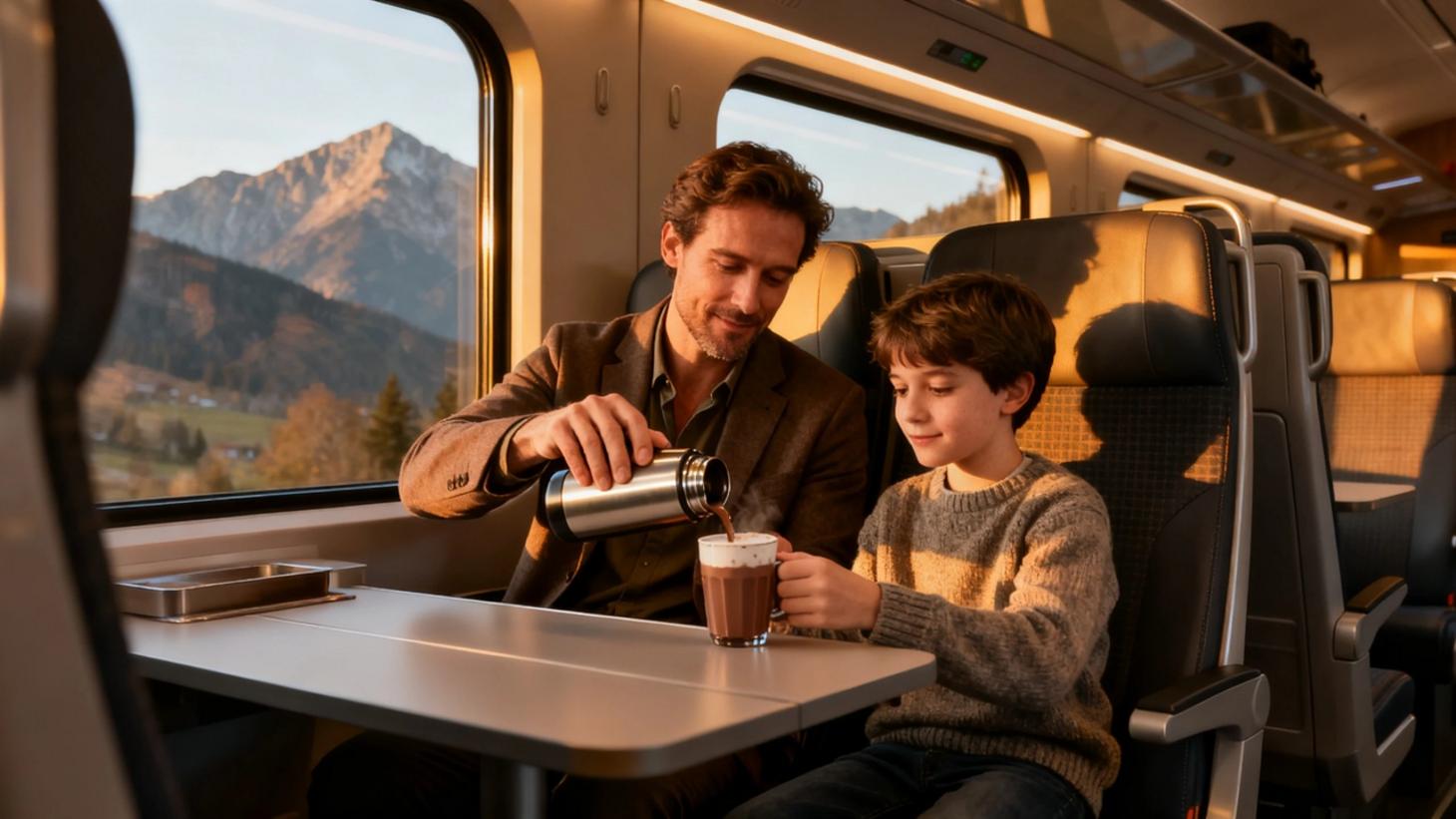
Munich to Zurich Train — Schedule & Tips
Quick Answer
The Munich to Zurich train takes approximately four hours with direct services running every two hours throughout the day. Tickets start from around CHF 40 ($45) for advance second-class fares and go up to CHF 120 ($135) for flexible first-class tickets. You can book through Deutsche Bahn, SBB, or third-party platforms.
What You Will Find in This Guide
How the Route Works
The Munich to Zurich train route is a direct international connection covering approximately 315 kilometers. Trains depart from Munich Hauptbahnhof (Munich Central Station) and arrive at Zurich Hauptbahnhof (Zurich HB), which sits in the heart of the city next to the Limmat River and within walking distance of the Old Town.
Most services on this route are operated jointly by Deutsche Bahn (DB) and Swiss Federal Railways (SBB). You will travel on EuroCity (EC) trains, which are designed for cross-border journeys and offer a comfortable ride with modern amenities.
The train crosses the German-Swiss border near Lindau and continues through the Swiss cantons of St. Gallen and Zurich. There are no passport checks on board, but you should carry a valid ID or passport as Switzerland is not part of the European Union and spot checks can occur.
Main Stops Along the Route
After leaving Munich, the train typically makes stops in Memmingen, Lindau, and St. Gallen before reaching Zurich. Some services may skip smaller stations depending on the time of day.
The scenic highlight is the stretch along Lake Constance (Bodensee), where you get views of the water and the Alps in the distance. If you sit on the right side of the train heading toward Zurich, you will have a better chance of catching these views.
Journey Time and Schedule
The Munich to Zurich train takes around four hours for most direct services. Some trains may take slightly longer if they make additional stops along the way.
Trains run every two hours throughout the day, starting from early morning until late evening. The first train usually departs Munich around 6:00 AM, and the last service leaves around 8:00 PM. Exact times vary by day, so it is worth checking the schedule in advance.
Sample Schedule
| Departure from Munich | Arrival in Zurich | Duration |
|---|---|---|
| 6:02 AM | 10:00 AM | 3h 58m |
| 8:02 AM | 12:00 PM | 3h 58m |
| 10:02 AM | 2:00 PM | 3h 58m |
| 12:02 PM | 4:00 PM | 3h 58m |
| 2:02 PM | 6:00 PM | 3h 58m |
| 4:02 PM | 8:00 PM | 3h 58m |
You can check real-time schedules and delays on the SBB website, which is the most reliable source for Swiss train information.
Frequency and Reliability
This is a well-traveled route with consistent service. Delays are rare but can happen due to weather or technical issues. Both Deutsche Bahn and SBB have good track records for punctuality compared to other European rail operators.
If you miss your train, there is usually another one in two hours. Flexible tickets allow you to board the next available service without penalty.
Ticket Prices and Booking
Ticket prices for the Munich to Zurich train vary depending on how far in advance you book, the class of service, and whether you choose a flexible or advance-purchase fare. Second-class tickets start at around CHF 40 ($45) if booked weeks ahead, while last-minute purchases can cost CHF 80 to CHF 100 ($90 to $112).
First-class tickets offer more space, quieter cabins, and sometimes complimentary snacks or drinks. Expect to pay CHF 90 to CHF 120 ($101 to $135) for first-class depending on flexibility.
Where to Buy Tickets
You can purchase tickets through several platforms. The most common options are the Deutsche Bahn website, the SBB website, or third-party booking sites like Trainline or Omio. Prices are generally the same across platforms, but check for any booking fees.
If you have a rail pass such as the Eurail Pass or Swiss Travel Pass, you can use it on this route. The Eurail Pass covers the entire journey, while the Swiss Travel Pass is valid from the Swiss border onward.
Advance vs. Flexible Tickets
Advance tickets (called Sparpreis by Deutsche Bahn) are cheaper but tie you to a specific train. If you miss it, you will need to buy a new ticket. Flexible tickets (Flexpreis) cost more but allow you to take any train on the same route that day.
If your schedule is firm, book an advance ticket. If you want flexibility, pay the extra for a Flexpreis fare or consider a rail pass if you are traveling multiple routes in Europe.
Youth and Senior Discounts
Travelers under 26 often qualify for discounted youth fares. Deutsche Bahn and SBB both offer reductions for young passengers. Seniors over 60 may also find discounts, though these are less common on international routes.
Always check the discount options during booking. You may need to show proof of age on board.
What to Expect on Board
EuroCity trains on the Munich to Zurich route are modern and comfortable. Second-class cabins have standard seating with decent legroom, power outlets, and overhead luggage racks. First-class offers wider seats, more space, and a quieter environment.
Trains have a dining car or a trolley service where you can buy snacks, sandwiches, coffee, and soft drinks. Prices are higher than what you would pay at a supermarket, so bring your own food if you want to save money.
Luggage and Storage
There are no strict luggage limits on trains, but space can be tight during busy times. Large suitcases can be stored in the luggage racks near the doors or at the end of each carriage. Smaller bags fit on the overhead racks above your seat.
If you are traveling with skis, bikes, or oversized items, check the baggage policy in advance. Some items require a reservation or an additional fee.
Wi-Fi and Connectivity
Most EuroCity trains offer free Wi-Fi, though the connection can be unreliable in rural areas or tunnels. Mobile data works well on the German side, and Swiss networks are fast and dependable once you cross the border.
Download any offline maps, tickets, or entertainment before you board if you need guaranteed access.
Bathrooms and Accessibility
All trains have clean, functional bathrooms in both first and second class. Wheelchair-accessible facilities are available, and most stations have step-free access. If you need assistance, notify the train operator in advance.
Tips for First-Time Travelers
First-time travelers on the Munich to Zurich train should know a few practical details to make the journey smoother. Arriving at the station 15 to 20 minutes early gives you time to find your platform and settle in without rushing.
Find Your Platform and Carriage
Both Munich and Zurich stations are large and busy. Departure boards display the platform number about 10 to 15 minutes before the train leaves. Platforms are clearly marked, and signs show which part of the platform corresponds to first or second class.
Look for carriage numbers on your ticket and match them to the signs on the platform. Boarding the correct carriage saves you from walking through the train with heavy luggage.
Border Crossing and Customs
The train crosses the German-Swiss border without stopping. There are no passport checks at the border itself, but Swiss customs officers occasionally board trains to check for goods. If you are carrying standard luggage and personal items, you will not have any issues.
Switzerland has strict limits on duty-free goods. You can bring in up to 1 liter of alcohol over 18% proof, 200 cigarettes, and personal items without paying duty. Avoid bringing large quantities of food, especially meat or dairy, as these are restricted.
Currency and Payments in Switzerland
Once you arrive in Zurich, you will be in a Swiss franc (CHF) economy. Many places accept euros, but the exchange rate is poor. Use a credit card or withdraw CHF from an ATM for better rates.
Public transport, restaurants, and shops in Zurich widely accept card payments. Cash is useful for small purchases at markets or older establishments.
What Time Is It in Zurich
Switzerland is in the Central European Time (CET) zone, the same as Germany. You do not need to adjust your watch when crossing the border. During daylight saving time, both countries shift to Central European Summer Time (CEST).
Connecting Onward from Zurich
Zurich Hauptbahnhof is one of Europe’s busiest train stations and a major hub for onward travel. From here, you can reach most Swiss cities and several international destinations without changing stations.
Zurich to Lucerne
The Zurich to Lucerne train is one of the most popular connections in Switzerland. Trains run every 30 minutes and take about 45 minutes to one hour. This route is covered by the Swiss Travel Pass and offers views of the countryside and Lake Zurich.
Lucerne is a gateway to Mount Pilatus, Mount Rigi, and other Alpine destinations. If you are visiting Switzerland for the first time, this is a worthwhile day trip or stopover.
Zurich to Milan
The Zurich to Milan train takes around three to four hours and crosses the Alps through the Gotthard Base Tunnel, the world’s longest rail tunnel. EuroCity trains run several times a day, and first-class service includes meal options.
This is a scenic route, especially before entering the tunnel, where you pass through mountain valleys and villages in the Swiss canton of Ticino.
Paris to Zurich Train
If you are continuing to France, the Paris to Zurich train takes about four hours on the high-speed TGV Lyria service. Trains run multiple times daily, and the route passes through Basel and the French countryside.
Book this route in advance for the best prices, as flexible tickets can be expensive.
Things to Do in Zurich Switzerland
Once you arrive, there are plenty of things to do in Zurich Switzerland. The Old Town (Altstadt) is a short walk from the station and features narrow streets, historic buildings, and the Grossmünster church. The lakefront promenade along Lake Zurich is popular for walks and boat rides.
Bahnhofstrasse, one of the world’s most exclusive shopping streets, runs directly from the train station. Museums like the Kunsthaus Zurich and the Swiss National Museum are also nearby.
For a full guide to what to see and do, check out our things to do in Zurich page.
Where Is Zurich Located
Zurich is located in north-central Switzerland at the northwestern tip of Lake Zurich. The city sits at an altitude of approximately 400 meters above sea level and is surrounded by hills and forests. It is the largest city in Switzerland with a population of around 430,000 in the city proper and over 1.8 million in the greater metropolitan area.
Frequently Asked Questions
How long is the train from Munich to Zurich?
The train from Munich to Zurich takes approximately four hours on direct EuroCity services. Some trains may take slightly longer if they make additional stops at smaller stations along the route. Trains run every two hours throughout the day.
Do I need to book the Munich to Zurich train in advance?
You do not need to book in advance, but doing so can save you money. Advance tickets start at around CHF 40 ($45), while last-minute fares can cost CHF 80 to CHF 100 ($90 to $112). Flexible tickets allow you to take any train on the same route that day.
Can I use a Eurail Pass on the Munich to Zurich train?
Yes, the Eurail Pass is valid on the entire Munich to Zurich route. You do not need to pay extra for this journey if you have a valid pass. The Swiss Travel Pass covers the Swiss portion from the border to Zurich.
Are there direct trains from Munich to Zurich?
Yes, there are direct EuroCity trains from Munich to Zurich operated by Deutsche Bahn and Swiss Federal Railways. These trains run throughout the day with no changes required. The journey takes around four hours from Munich Hauptbahnhof to Zurich Hauptbahnhof.
What is the best time to travel from Munich to Zurich by train?
The best time to travel depends on your schedule and what you want to see. Morning trains allow you to arrive in Zurich by midday and have the full afternoon to explore. The stretch along Lake Constance offers the best views during daylight, so avoid evening trains if scenery matters to you.
Final Thoughts on the Munich to Zurich Train
The Munich to Zurich train is a reliable, comfortable, and scenic way to travel between Germany and Switzerland. With frequent departures, reasonable ticket prices when booked in advance, and a journey time of around four hours, it is a practical option for both tourists and business travelers.
If you are planning to explore Switzerland further, Zurich is an excellent starting point with easy connections to Lucerne, Milan, and other Swiss cities. For more tips on what to see and do once you arrive, visit our guide to things to do in Zurich.
