

The Paris to Zurich train connects two of Europe’s most visited cities across a distance of roughly 490 kilometers. This direct route takes you from the heart of France into German-speaking Switzerland in about four hours, passing vineyards, the Jura mountains, and some of the cleanest farmland you will see anywhere. Most travelers on this route are headed to Zurich for a stopover before exploring the Alps, connecting to other Swiss cities, or starting work in Switzerland’s financial center. This guide covers train times, ticket prices in Swiss francs and dollars, booking tips, and what to expect on board.
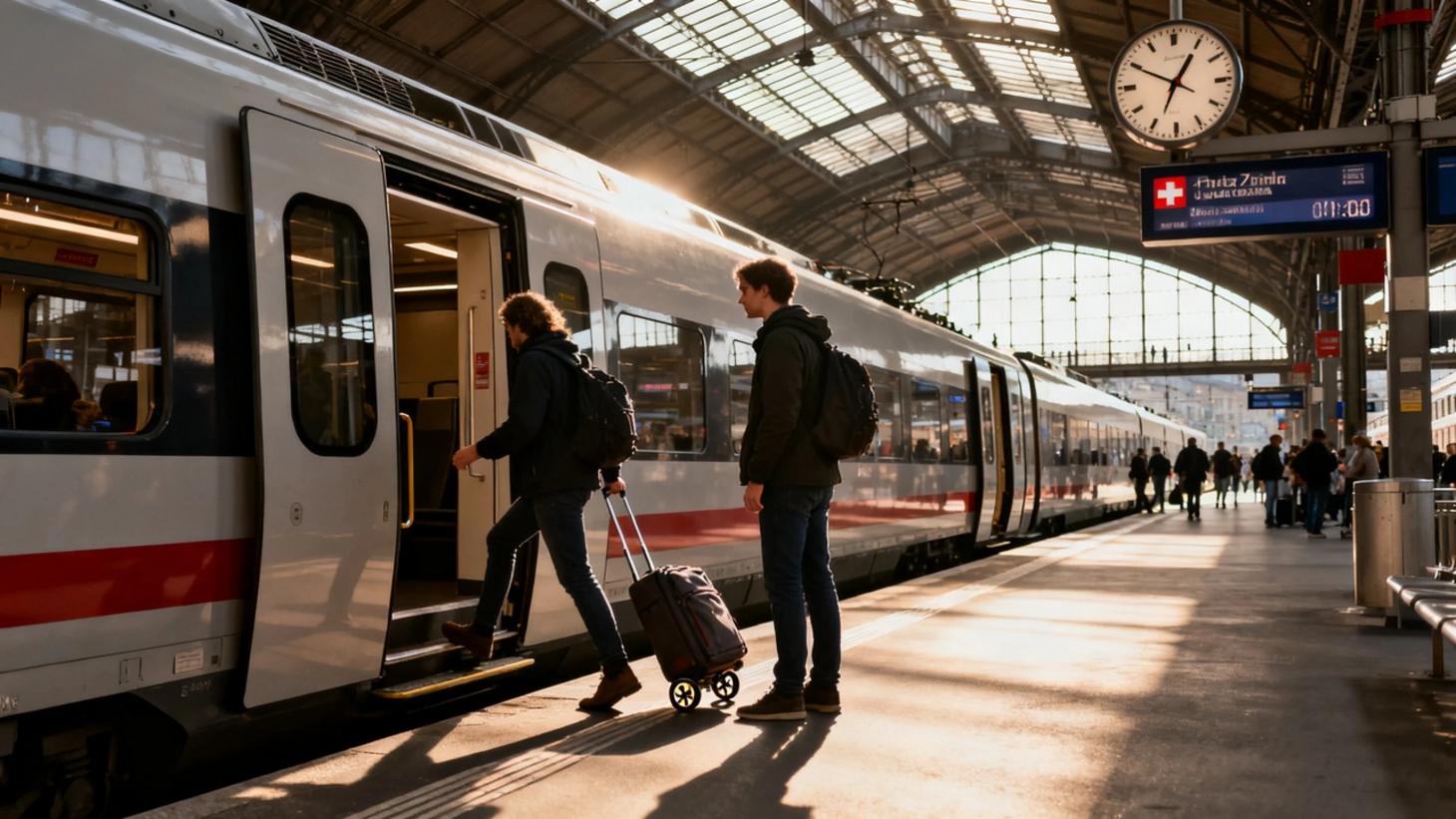
Paris to Zurich Train — Times, Prices, Booking
Quick Answer
The Paris to Zurich train runs up to 6 times daily with direct high-speed TGV Lyria services taking 4 hours and 3 minutes on average. Tickets start from CHF 29 (around $32) when booked early, rising to CHF 200+ ($220+) for last-minute first-class seats. Trains depart from Paris Gare de Lyon and arrive at Zurich Hauptbahnhof.
What You Will Find in This Guide
How the Paris to Zurich Train Works
The Paris to Zurich train is operated by TGV Lyria, a joint venture between French national railway SNCF and Swiss Federal Railways (SBB). This is a dedicated high-speed service running on double-decker TGV trains modified for cross-border travel. Trains leave from Paris Gare de Lyon, not Paris Gare du Nord or Paris Est, so confirm your departure station when booking.
Once you board in Paris, the train travels east through Burgundy wine country and crosses into Switzerland near the border town of Vallorbe. From there it continues northeast through the Swiss plateau, stopping briefly at Lausanne and sometimes Bern, before arriving at Zurich Hauptbahnhof in the city center.
This is a direct service, meaning you stay on the same train the entire journey. You will not need to change trains or deal with separate tickets unless you book a cheaper connecting route with stops in smaller cities.
Who Operates This Route
TGV Lyria trains are branded in red and white with both French and Swiss flags on the exterior. You book directly through SBB, SNCF, or third-party platforms like Trainline or Omio. Tickets are valid across all sales channels, but prices vary based on where and when you buy.
Passport and Customs
Switzerland is not part of the European Union, but it is part of the Schengen Area. You will need a valid passport or national ID card if you are an EU citizen. Border checks happen on the train or occasionally at the station. Officers rarely ask questions if your documents are in order, but keep your passport accessible during the journey.
Journey Time and Schedule
The fastest Paris to Zurich train takes exactly 4 hours and 3 minutes from platform to platform. This is the direct TGV Lyria high-speed service with no intermediate stops except Lausanne. Some trains make additional stops in Bern or Fribourg, which adds 10 to 20 minutes to the total journey time.
Trains depart 5 to 6 times per day depending on the season. Morning departures typically leave Paris Gare de Lyon at 07:23, 09:23, and 11:23. Afternoon trains depart around 13:23, 15:23, and 17:23. Weekend schedules are nearly identical, but holiday periods may see extra services or altered timings.
Zurich Hauptbahnhof is the arrival station for all services. This is Zurich’s main train hub, located in the Altstadt district within walking distance of hotels, trams, and the Limmat River. The station has 26 platforms, so confirm your arrival track on the departure board or app before disembarking.
Peak vs Off-Peak Times
Peak travel times are Friday afternoons and Sunday evenings, when business travelers and weekend tourists fill seats. Trains departing Paris on weekday mornings and returning on Sunday nights tend to sell out first. If flexibility allows, book mid-morning or early afternoon trains for lower prices and better seat selection.
Delays and Reliability
TGV Lyria trains run on time roughly 85 to 90 percent of the time according to SBB performance data. Most delays are under 10 minutes and caused by border checks, track congestion near Lyon, or weather in the Jura mountains during winter. Major delays over 30 minutes are rare and usually result in compensation under EU passenger rights rules.
Ticket Prices and Booking
Ticket prices for the Paris to Zurich train range from CHF 29 ($32) up to CHF 200+ ($220+) depending on travel class, time of booking, and flexibility. The lowest fares appear 3 to 4 months before departure and sell out within days. Standard second-class tickets bought one week in advance typically cost CHF 90 to CHF 120 ($100 to $135).
First-class tickets add CHF 40 to CHF 80 ($45 to $90) to the base fare. You get wider seats, more legroom, power outlets at every seat, and complimentary snacks and drinks. First class is worth it if you plan to work on the train or simply want a quieter ride.
Flexible tickets allow date and time changes up to the departure minute, but cost CHF 180 to CHF 200 ($200 to $220) in second class. Semi-flexible tickets allow changes for a CHF 20 fee. Non-flexible tickets are the cheapest but cannot be changed or refunded once booked.
Where to Buy Tickets
You can book tickets through the SBB website, the SBB Mobile app, SNCF Connect, Trainline, Omio, or at ticket counters in Paris or Zurich. SBB and SNCF offer identical prices, but third-party platforms sometimes add booking fees of $3 to $10 per ticket.
The SBB Mobile app is the best option for English speakers living or traveling in Switzerland. It displays real-time departure boards, platform changes, and connection alerts. The app also stores your ticket digitally, so you do not need to print anything.
Discounts and Railpasses
Eurail and Interrail passes cover this route, but you must pay a mandatory reservation fee of CHF 27 ($30) per person in second class or CHF 45 ($50) in first class. The pass itself does not guarantee a seat, so book your reservation as early as possible during summer and winter holiday periods.
Swiss Travel Passes do not cover the Paris to Zurich train outside Swiss borders, but they cover the portion from the border to Zurich. This saves roughly CHF 15 to CHF 20 off the total fare. Half-Fare Cards reduce Swiss rail travel by 50 percent and apply only to the Swiss section of the journey.
Price Comparison by Booking Window
| Booking Window | Second Class Price | First Class Price |
|---|---|---|
| 3 to 4 months early | CHF 29 to CHF 49 ($32 to $55) | CHF 59 to CHF 89 ($65 to $100) |
| 1 month early | CHF 70 to CHF 100 ($78 to $112) | CHF 110 to CHF 140 ($123 to $157) |
| 1 week early | CHF 90 to CHF 130 ($100 to $145) | CHF 140 to CHF 180 ($157 to $202) |
| Same day | CHF 120 to CHF 160 ($135 to $180) | CHF 180 to CHF 220 ($202 to $247) |
What to Expect on Board
TGV Lyria trains are double-decker with second-class seating on both levels and first-class seating primarily on the upper deck. Seats are arranged in rows of four (two facing two) or airline-style rows of two. Large luggage racks sit at the end of each carriage, and overhead bins hold smaller bags and backpacks.
Power outlets are available at most seats in first class and roughly 50 percent of seats in second class. USB charging ports are less common and appear only on newer train sets. Wi-Fi is available but unreliable once the train crosses into mountainous terrain near the Swiss border. Download maps, tickets, and entertainment before boarding.
A bar car sits mid-train and sells sandwiches, pastries, coffee, soft drinks, beer, and wine. Prices are high by Swiss standards: expect CHF 6 ($7) for a coffee, CHF 10 ($11) for a sandwich, and CHF 8 ($9) for a beer. You can bring your own food and drinks on board without restriction.
Seat Reservations
Seat reservations are mandatory and included in your ticket price. You choose your seat at the time of booking or the system assigns one automatically. Window and aisle preferences are available, but exact seat selection depends on train occupancy.
Families traveling with children under 12 can request the family zone, which groups seats together and offers slightly more space. Quiet zones exist on some trains and prohibit phone calls and loud conversations.
Luggage Allowance
There is no official luggage weight limit, but you must be able to carry and store your bags without assistance. Each passenger can bring two large suitcases plus one carry-on. Skis and bicycles require advance reservations and incur a fee of CHF 10 ($11) per item.
Luggage racks fill quickly during peak seasons, so board early to secure space near your seat. Overhead bins fit backpacks and small roller bags but nothing larger than cabin baggage size.
Tips for First-Time Travelers
Arrive at Paris Gare de Lyon at least 20 minutes before departure to locate your platform, validate your ticket if needed, and board without rushing. The station is large with 23 platforms, and finding the correct departure board can take longer than expected during busy periods.
Download the SBB Mobile app before you travel. It works offline once you load your ticket and shows real-time updates for delays, platform changes, and connections. The app also includes a detailed map of Zurich Hauptbahnhof, which helps you navigate the station upon arrival.
Bring snacks and water if traveling on a budget. Bar car prices are inflated, and food options disappear quickly on busy trains. A sandwich and bottle of water from a Paris supermarket costs CHF 5 ($6) compared to CHF 15 ($17) on board.
Best Side of the Train for Views
Sit on the left side when traveling from Paris to Zurich for better views of Lake Geneva, vineyards, and the Jura foothills. The right side offers views of the French countryside and agricultural land in the Swiss plateau. Neither side is particularly scenic until you approach Lausanne roughly 3 hours into the journey.
Currency and Payment
Trains accept euros and Swiss francs at the bar car, but the exchange rate is poor. Use a credit card or pay in francs if possible. ATMs inside Zurich Hauptbahnhof dispense Swiss francs with competitive exchange rates, or withdraw cash before leaving Paris.
Language on Board
Announcements are made in French, German, and English. Train staff speak English fluently and can assist with connections, luggage, or ticket issues. Menus and signage in the bar car appear in French and German, with limited English translations.
Connecting Onward from Zurich
Zurich Hauptbahnhof is Switzerland’s busiest train station and the main hub for onward travel across the country. Trains depart every 30 minutes to Lucerne, Bern, Basel, and Geneva. Connections to the Alps leave hourly for destinations like Interlaken, Zermatt, and St. Moritz.
The Zurich to Lucerne train takes 47 minutes and costs CHF 25 ($28) in second class. This is one of the most scenic routes in Switzerland, following the shore of Lake Zurich before climbing into the mountains. Trains run every 30 minutes from early morning until midnight.
If heading to Milan, the Zurich to Milan train departs hourly and takes 3 hours and 15 minutes. Tickets cost CHF 50 to CHF 90 ($56 to $101) depending on booking time. This route crosses the Gotthard Base Tunnel, the longest railway tunnel in the world at 57 kilometers.
Airport Connections
Zurich Airport sits 10 kilometers north of the city center and connects to Zurich Hauptbahnhof by direct train in 10 minutes. Trains depart every 10 minutes throughout the day and cost CHF 6.80 ($7.60) with a standard ticket. The Swiss Travel Pass covers this route at no extra cost.
Where Zurich Is Located
Zurich is located in north-central Switzerland at an elevation of 408 meters above sea level. The city sits at the northwestern tip of Lake Zurich, surrounded by rolling hills and farmland. It serves as the capital of Zurich Canton and is the largest city in Switzerland with a population of roughly 440,000 in the urban core and 1.5 million in the metro area.
What Time Is It in Zurich
Zurich operates on Central European Time (CET), which is UTC+1 in winter and UTC+2 during daylight saving time from late March to late October. When you travel from Paris to Zurich, you do not cross time zones since both cities use CET. Your phone and watch will not need adjustment upon arrival.
Frequently Asked Questions
How long is the train from Paris to Zurich?
The direct TGV Lyria train from Paris to Zurich takes 4 hours and 3 minutes on average. Some services make intermediate stops in Lausanne or Bern, adding 10 to 20 minutes to the total journey time. Trains run up to 6 times daily from Paris Gare de Lyon to Zurich Hauptbahnhof.
How much does the Paris to Zurich train cost?
Tickets start from CHF 29 (around $32) when booked 3 to 4 months in advance. Standard fares bought one week before travel range from CHF 90 to CHF 130 ($100 to $145) in second class. Last-minute tickets can reach CHF 160 ($180) or more depending on travel class and flexibility.
Do I need a seat reservation on the Paris to Zurich train?
Yes, seat reservations are mandatory and included automatically in your ticket price. You cannot board the TGV Lyria train without a confirmed seat assignment. You can choose your seat during booking or the system assigns one based on availability.
Can I use a Eurail pass on the Paris to Zurich train?
Yes, but you must pay a mandatory reservation fee of CHF 27 ($30) in second class or CHF 45 ($50) in first class. The Eurail or Interrail pass covers the train fare, but reservations are limited and sell out quickly during peak travel periods like summer and Christmas holidays.
What are the best things to do in Zurich?
Top things to do in Zurich include walking the Altstadt old town, visiting the Swiss National Museum, shopping on Bahnhofstrasse, and swimming in the Limmat River during summer. The Uetliberg mountain offers panoramic views of the city and Alps, accessible by a 25-minute train ride from Zurich Hauptbahnhof.
Final Thoughts on the Paris to Zurich Train
The Paris to Zurich train is one of the most comfortable and reliable ways to travel between France and Switzerland. The 4-hour journey beats flying when you factor in airport transit, security, and boarding time. Prices stay reasonable if you book early, and the onboard experience is quiet, clean, and efficient. For travelers planning to explore things to do in Zurich Switzerland or continue onward to Lucerne, Bern, or the Alps, this train sets you up perfectly in the heart of the city. Book at least 2 to 4 weeks ahead for the best fares, download your ticket to the SBB Mobile app, and arrive at Paris Gare de Lyon with time to spare.
